Growth is supposed to be a good thing.
More orders mean more revenue. More customers. More momentum.
But for many DTC brands, growth brings something else with it—something far less expected.
Operations start to strain. Fulfillment slows down. Costs creep higher. And what once felt like a well-functioning system begins to show cracks.
At first, it’s easy to dismiss. A delayed shipment here. A small spike in costs there.
But over time, the pattern becomes clear:
The faster your brand grows, the harder it becomes for your fulfillment to keep up.
And in most cases, the problem isn’t your team. It isn’t even your 3PL partner.
It’s the model they’re built on.
The Illusion of Scalable Fulfillment
Outsourcing fulfillment is often seen as a natural step in a brand’s growth.
You move away from in-house operations, partner with a 3PL, and expect the system to scale alongside your business. More volume should mean more efficiency. Better economics. Smoother operations.
But that’s not how traditional fulfillment actually works.
Behind the scenes, most 3PLs operate on a simple equation: more orders require more people. More people increase costs. And as costs rise, margins begin to shrink.
It’s a system designed for steady, predictable volume—not rapid, compounding growth.
So when your business starts to scale quickly, the fulfillment model doesn’t accelerate with you.
It struggles to keep up.
When Growth Becomes a Constraint
The effects of this mismatch don’t show up all at once. They surface gradually, often in ways that seem unrelated.
Delivery times begin to stretch. Orders that once shipped same-day now take longer to process. During peak periods, backlogs start to form, and service levels become harder to maintain.
At the same time, costs move in the wrong direction. Instead of benefiting from scale, you see increases in pick-and-pack fees, labor surcharges, and storage inefficiencies. Peak season brings additional fees, not additional leverage.
And then there’s accuracy.
As volume increases, so does operational complexity. More SKUs, more picks per order, more room for error. Even small mistakes begin to compound at scale, leading to returns, support tickets, and customer frustration.
Individually, each of these issues can be managed. Together, they create a system that becomes more fragile as your business grows.
The Real Cost Isn’t Operational—It’s Revenue
Most brands look at fulfillment through the lens of cost.
How much are we paying per order?
Where can we reduce fees?
How do we negotiate better rates?
But the bigger impact of fulfillment isn’t what you spend.
It’s what you lose.
When orders are delayed or arrive inconsistently, customers notice. Delivery becomes part of the brand experience, and when that experience falls short, it affects more than just a single transaction.
Conversion rates begin to suffer. Customers hesitate at checkout if delivery feels uncertain. Repeat purchases decline when the first experience doesn’t meet expectations. Over time, growth slows—not because demand isn’t there, but because the system supporting it can’t deliver.
This is the hidden cost of a fulfillment model that doesn’t scale.
The Root of the Problem
It’s tempting to attribute these issues to execution. A better 3PL. A stronger operations team. More oversight.
But the underlying problem is structural.
Traditional fulfillment is built on three core characteristics: it is manual, labor-dependent, and centralized.
Each of these introduces constraints.
Labor-dependent systems struggle to scale quickly. Hiring, training, and managing a workforce takes time, and performance can vary. Centralized operations limit how quickly orders can reach customers, especially as your customer base becomes more geographically distributed.
These constraints don’t matter as much at low volume.
At scale, they become defining.
Why Optimization Isn’t Enough
Many brands try to solve these challenges by optimizing within the existing model.
They negotiate better rates. They improve processes. They push their 3PL partners for better performance.
And while these efforts can create incremental improvements, they don’t address the core issue.
You can make a labor-based system more efficient.
You can’t make it scale exponentially.
At some point, the model itself becomes the bottleneck.
What a Scalable Model Actually Looks Like
To support modern ecommerce growth, fulfillment needs to change in more fundamental ways.
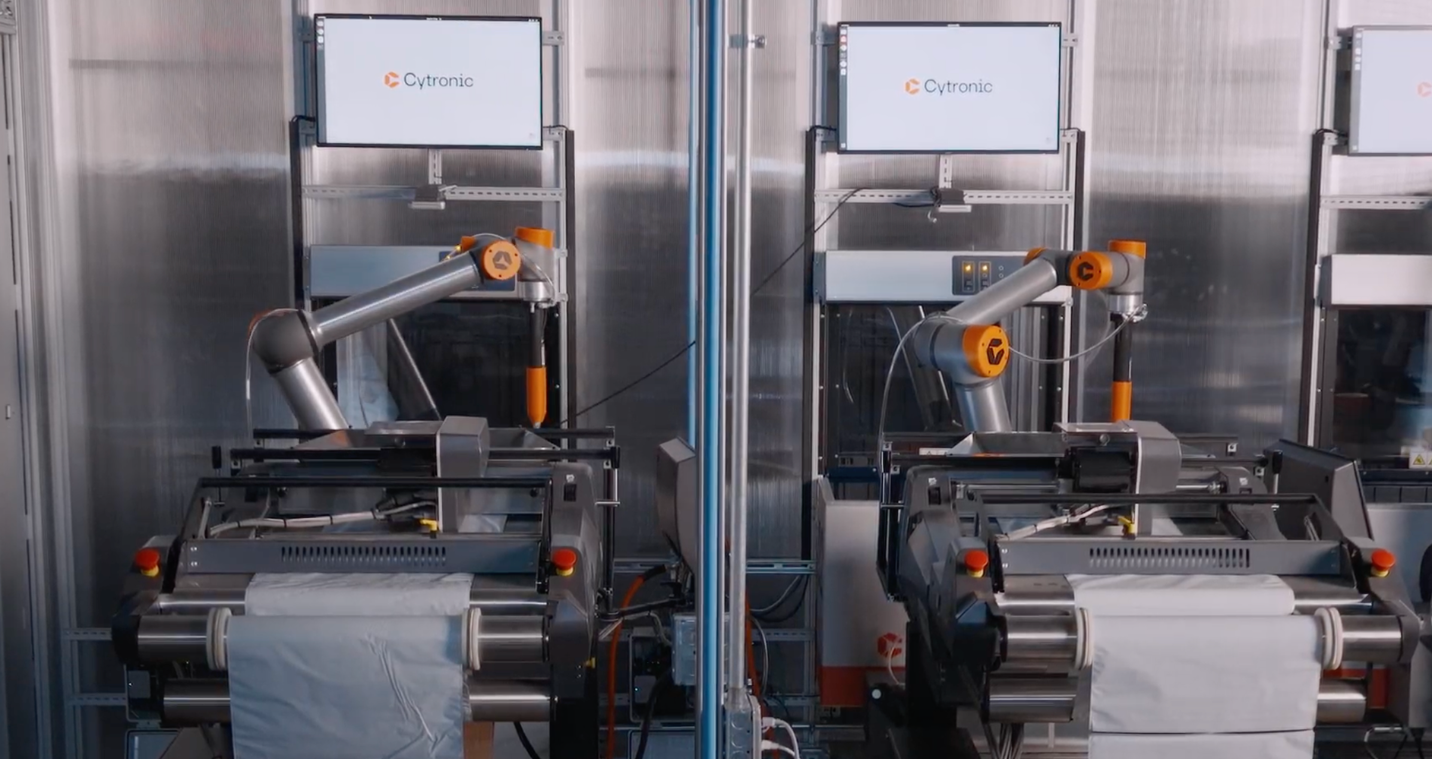
The first shift is away from labor as the primary driver of scale. In a robot-first system, operations are no longer constrained by hiring cycles or workforce variability. Automated systems can run continuously, maintain consistent accuracy, and handle spikes in demand without slowing down.
The second shift is away from a single location.
A distributed fulfillment network places inventory closer to customers, reducing the distance each order needs to travel. This enables faster delivery times and lowers shipping costs at the same time—something that’s difficult to achieve in a centralized model.
Together, these changes redefine how fulfillment behaves at scale.
Instead of becoming slower and more expensive as volume increases, the system becomes more efficient.
From Bottleneck to Advantage
When fulfillment is built on a model that scales properly, the outcomes look very different.
Costs begin to decrease with volume instead of increasing. Delivery speeds improve as inventory is positioned closer to demand. Accuracy remains consistent, even as order complexity grows.
But the most important change is how fulfillment impacts the business.
It stops acting as a constraint on growth and starts contributing to it.
Faster, more reliable delivery improves conversion rates. Lower costs protect margins. A better customer experience drives repeat purchases.
What was once a backend function becomes a competitive advantage.
Growth Shouldn’t Break Your Operations
If your fulfillment costs are rising as you scale, if delivery performance is becoming less reliable, or if your 3PL is struggling to keep up, it’s not a temporary issue.
It’s a signal.
A signal that the system you’re relying on wasn’t designed for the level of growth you’re experiencing.
The solution isn’t just to optimize around the edges. It’s to rethink the model entirely.
Because growth shouldn’t create friction in your operations.
It should be supported by them.
If your 3PL is struggling to keep up with your growth, it may be time to rethink your fulfillment strategy.
Talk to a Cytronic fulfillment specialist to see how a robotic, distributed network can reduce your costs and improve delivery speed.